If your impression of seaweed is still limited to sushi rolls or roasted nori sheets, you may be missing out on a product that is quietly gaining popularity in the snack market — fried seaweed.
Unlike roasted nori, which is prized for its dry, crisp texture, fried seaweed offers a richer, oilier, and more intensely flavored crunch through a batter-coating or paste-application process followed by deep-frying. What was once a traditional home-style snack in Japan and Korea is now evolving into an industrially produced snack category. This article explores the distinct styles of Japanese and Korean fried seaweed, and why they are worth your attention as a B2B buyer.
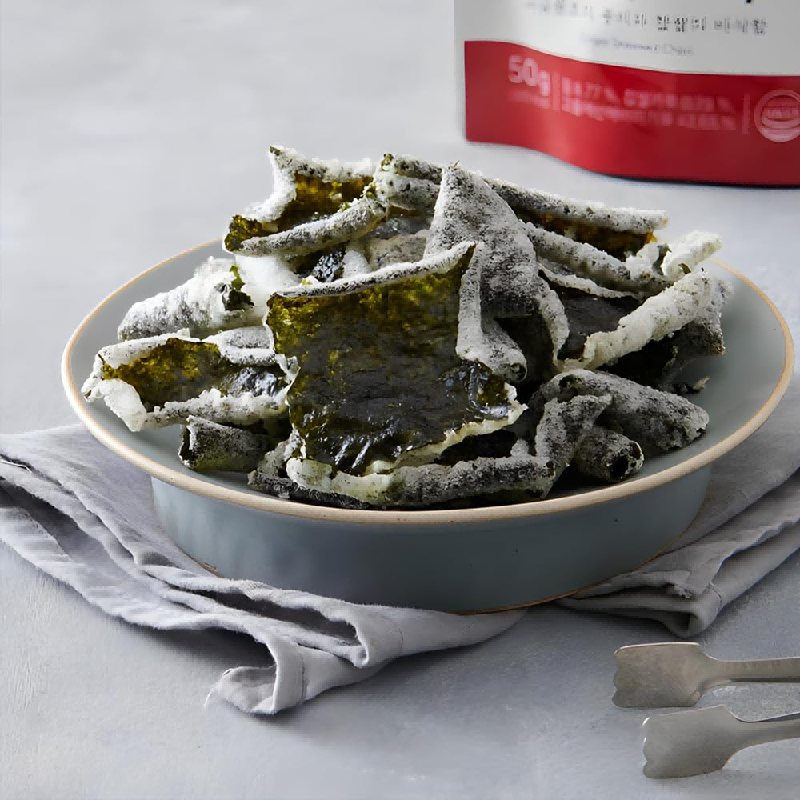
Japanese Style: The Light Elegance of Seaweed Tempura
In Japanese cuisine, the most common form of fried seaweed is Nori Tempura. The process is simple yet precise: nori sheets are cut into smaller pieces, lightly brushed with a thin batter (typically made from cake flour, starch, baking powder, and iced water), and then deep-fried in oil at 130–150°C for about 7 seconds to 2 minutes, until golden and crispy.
Japanese-style fried seaweed is defined by its lightness. The batter is applied only on one side, and the frying time is brief, allowing the natural umami of the seaweed to shine through while adding a delicate, crispy texture. It is often served as a snack to accompany drinks, or seasoned with spices like shichimi togarashi or wasabi powder for added complexity. In some Japanese restaurants, fried seaweed also appears as part of a tempura platter, adding visual and textural variety.
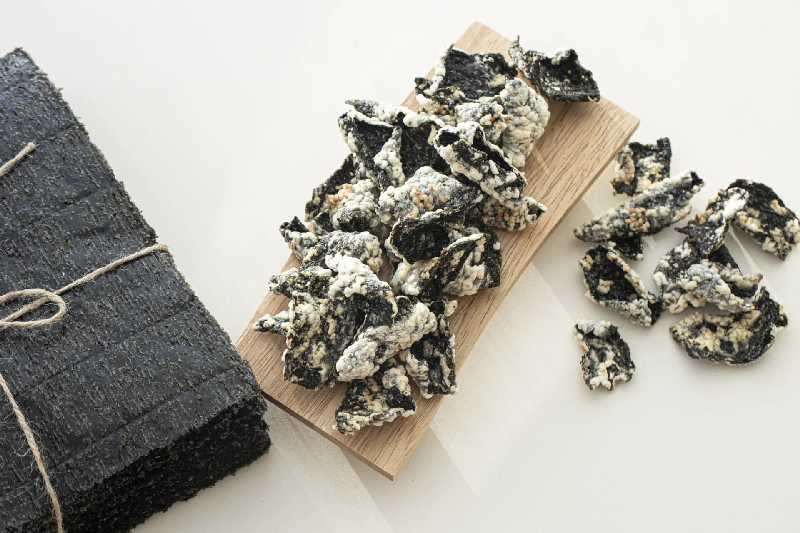
Korean Style: The Rich Evolution of Gim Bugak
Korean fried seaweed, known as “Gim Bugak” (김부각) , follows a distinctly different preparation method. Traditionally, glutinous rice is cooked into a thick paste, which is then evenly spread onto nori sheets — sometimes two sheets are laminated together — and sprinkled with sesame seeds. The coated sheets are then sun-dried for several days until they become hard and brittle.
When fried, these dried sheets transform into a thicker, crispier, and more textured snack, with the aroma of glutinous rice and the nuttiness of sesame seeds adding extra layers of flavor. Modern Korean versions have expanded beyond the traditional recipe, introducing variations such as shrimp-flavored or nut-mixed Gim Bugak, and are now widely available in convenience stores and supermarkets as a healthy snack option. .
Each style offers distinct advantages: Japanese-style fried seaweed highlights the natural flavor and lightness of the nori itself, making it suitable for premium snack positioning. Korean-style, with its rice paste and multi-step process, creates a richer texture and opens up more possibilities for flavor integration (e.g., sesame, nuts, shrimp, or spices), allowing for a diverse product line under one brand.
At Beijing Shipuller Co., Ltd., we offer solutions for both Japanese and Korean-style fried seaweed products, tailored to your formulation and production requirements. Whether you are looking to expand your snack portfolio or explore a new category, we are ready to support you with samples, technical data, and customized options.
For samples or further information, please contact us today.
Contact:
Beijing Shipuller Co., Ltd.
WhatsApp: +86 136 8369 2063
Web: https://www.yumartfood.com/
Post time: Aug-26-2026