Tobiko refers to the roe of the flying fish, with individual eggs measuring approximately 0.5 to 1 millimeter in diameter. Flying fish inhabit oceans worldwide, particularly in tropical and subtropical regions. They are capable of gliding just above the water’s surface at remarkable speeds—reaching 50 to 70 km/h—and can cover distances exceeding 100 meters in a single flight.
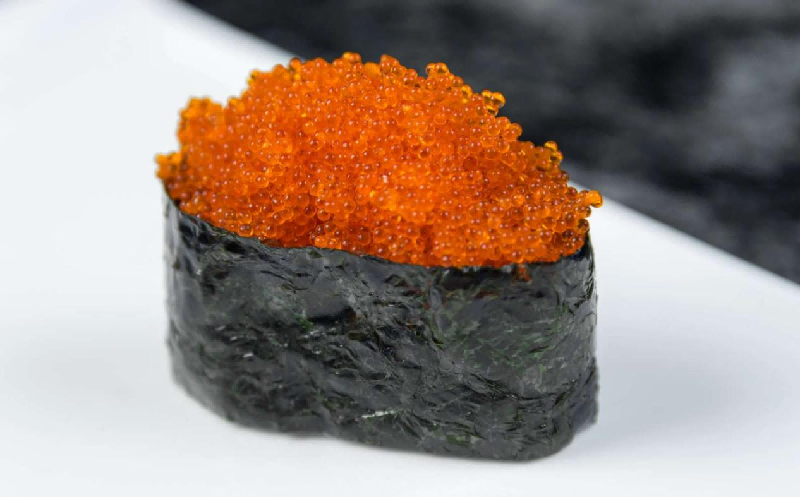
Masago (capelin or smelt roe) serves as a common substitute for tobiko.
Tobiko sushi is affordable and a staple at conveyor-belt sushi restaurants in Japan. Due to the small size of the eggs, they are frequently used in *gunkan-maki* (battleship-style sushi); however, their vibrant colors and satisfying “pop” make them a popular garnish for salad rolls and *chirashizushi* (scattered sushi bowls) as well. While tobiko is high in cholesterol and should be consumed in moderation, it is also a nutritious food rich in protein and minerals.
Overseas, where visually striking presentations are often preferred, tobiko is used even more frequently than in Japan—though it is sometimes mistaken for *ikura* (salmon roe). Beyond *gunkan-maki*, tobiko is commonly used to coat the outside of inside-out rolls (such as California rolls) and frequently appears on the menus of high-end restaurants.
What is the natural color of tobiko?
In its natural state, tobiko is pale yellow. Because the eggs readily absorb color, they are typically processed with food coloring and seasonings when used as a sushi topping.
While tobiko in Japan is usually reddish-orange, overseas versions are processed into a wide array of colors and flavors. Examples include black (dyed with squid ink), pale orange (infused with yuzu citrus), and green (flavored with wasabi for a spicy kick), all of which add unique character to the sushi.
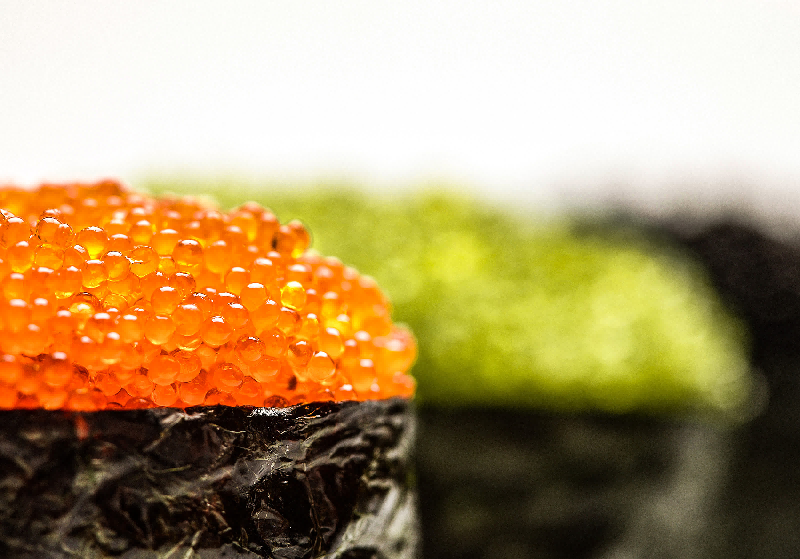
Is flying fish roe actually crab roe?
In Japan, many people know that *tobiko* (flying fish roe) is fish roe, just like *ikura* (salmon roe). However, in China, it is often mistaken for crab roe. This is because *tobiko* sushi is sometimes referred to as “gunkan crab roe sushi.”
Outside of China, black *tobiko* is sometimes called “black caviar,” similar to actual caviar (sturgeon roe).
Thanks to its distinctive appearance, flying fish roe is highly sought after around the world.
Contact:
Beijing Shipuller Co., Ltd.
WhatsApp: +86 136 8369 2063
Web: https://www.yumartfood.com/
Post time: Aug-18-2026