High-grade soy sauce is not necessarily suitable for the dishes you want to cook; you must choose soy sauce based on your ingredients.
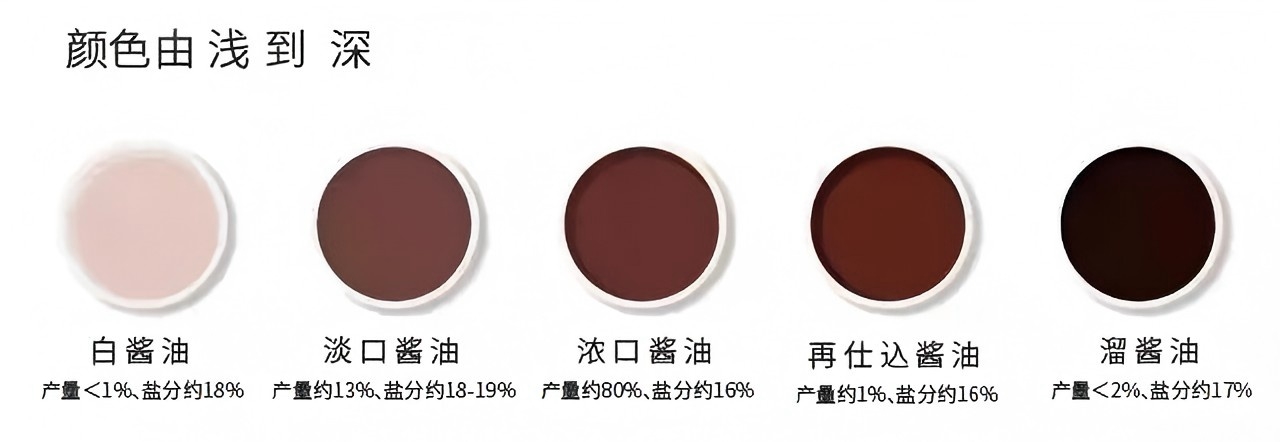
Soy sauce can be categorized by color, from light to dark: white soy sauce, light soy sauce, dark soy sauce, sesame soy sauce, and simmering soy sauce. Choosing the right soy sauce for different dishes is an advanced skill for culinary professionals.
Light Soy Sauce | うすくちSoy Sauce
Brewing Time: >180 days
Flavor: Stronger umami
Pairings: Soups, simmered dishes, dashi (broth), etc.
For dishes that don’t require coloring or want to showcase the natural flavor and color of the ingredients, light soy sauce is the best choice.
White soy sauce, made by adding white rice to the brewing process, has a shorter fermentation time and a lighter flavor and color, making it a favorite in Kansai cuisine. When simmering kelp dashi, light soy sauce doesn’t overpower the kelp’s original umami flavor and prevents the broth from darkening.
Cooking Inspiration: The popular Japanese tonkotsu ramen, enhanced with light soy sauce, retains the pure white color of the broth while highlighting its rich and flavorful tonkotsu taste. Paired with smooth Japanese ramen, it’s a simple yet delicious everyday dish in a Japanese family.
Dark soy sauce | こいくち soy sauce
Kanto region, Chiba Prefecture, Kagawa Prefecture
Brewing time: >360 days
Flavor: A balanced blend of five flavors (sweet, sour, bitter, spicy, and umami)
Suitable for: Fish and meat dishes with a strong fishy smell
Dark soy sauce accounts for 80% of the Japanese soy sauce market, dominating the market. Made solely from soybeans and wheat, this brewing method perfectly blends the five flavors.
When tasted plain, the soy sauce delivers a powerful and layered flavor.
It not only has the unique umami flavor of amino acids, but also a mellow sweetness, refreshing sourness, subtle bitterness, and the saltiness of sea salt. As the most popular soy sauce in Japan, it is also a popular choice for Japanese souvenirs.
Cooking inspiration: This soy sauce is frequently used in home cooking, and everyday dishes like “Chikuzen-ni” (chūzen-ni) rely heavily on its flavor.
Its addition enriches the flavor of otherwise bland vegetables and meats, and after the sauce thickens, it absorbs the five flavors of soy sauce, resulting in a soft and tender texture.
Contact
Beijing Shipuller Co., Ltd
Whats App: +86 13683692063
Web: https://www.yumartfood.com/
Post time: May-25-2026