Japanese soy sauce is so delicious that it’s widely recognized as a “world-class condiment.” Top-grade soy sauce is said to be the whiskey of the condiment world, its natural amino acids providing a unique umami flavor that, with just a drop, perfectly enhances the natural taste of ingredients.
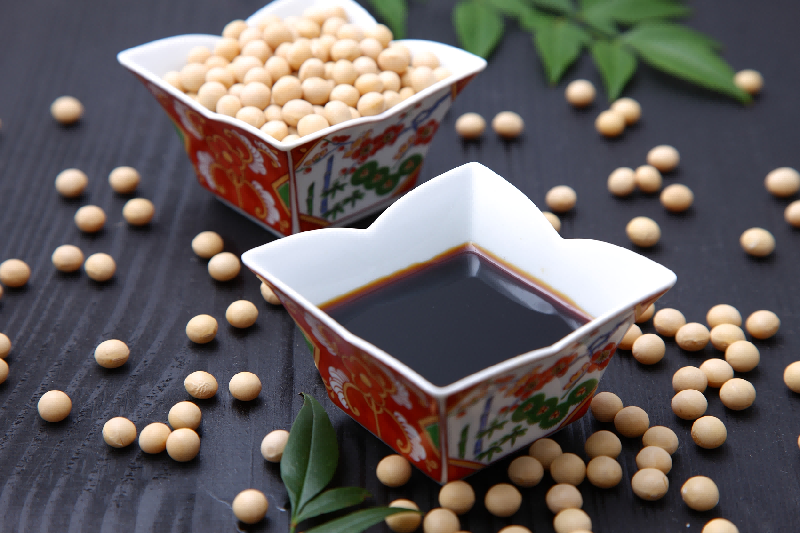
Japanese soy sauce originated in China.
During the Kamakura period, the Zen monk Kakushin, while teaching others the miso-making method he learned from China, accidentally created a miso with too much water using the wrong ingredients. Surprisingly, it tasted delicious.
This “watery miso” was the precursor to Japanese soy sauce, and it has since been refined and developed into its own distinct style.
Unlike other faster brewing methods, most Japanese soy sauces still adhere to the “Honjozo” process.
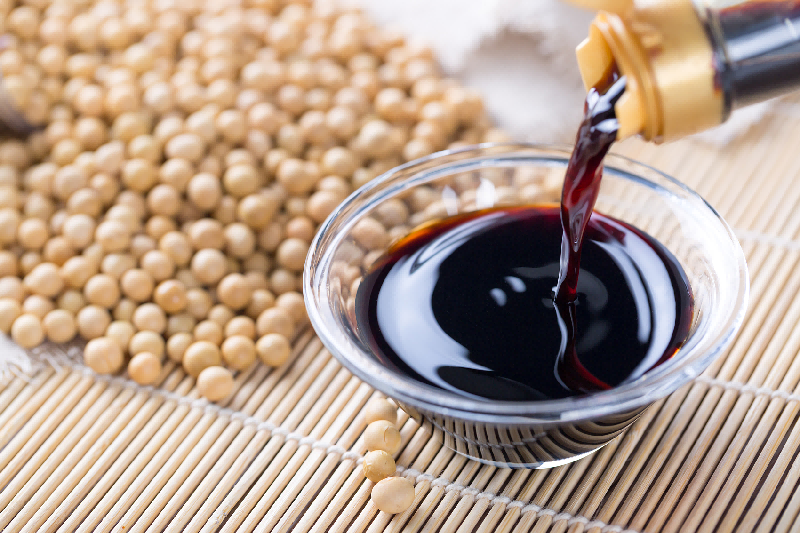
The main ingredient is wild soybeans, whose high-quality protein is fully converted into amino acids. Higher amino acid content results in a more umami-rich soy sauce. Roasted wheat is used as a secondary ingredient to further enhance the aroma of the soy sauce. The brewing water used is potable-grade groundwater, and traditional Japanese sea salt is used.
The entire process relies on food and microbial fermentation, with the addition of 2-2.5 times the amount of brine to the raw materials. This mixture is then steamed to create a flowing mash, followed by a long, low-temperature fermentation process, requiring at least 18 months before consumption.
No additives are used in this process, hence the name “pure soy sauce.”
While the production process and raw materials are the same, the taste of different brands of soy sauce still varies slightly.
Many Japanese soy sauce workshops, through centuries of accumulation, have developed numerous high-quality microorganisms in their brewing factories, obtaining their own unique brewing strains. These strains have become each brand’s secret weapon, captivating discerning palates.
Well-brewed Japanese soy sauce is graded according to specific standards: Extra Grade, High Grade, and Standard.
The Extra Grade designation can only be used for soy sauces made using this brewing method (with Kanro blended soy sauce being an exception). Within the Extra Grade category, those with even higher nutritional and flavor components can be designated as Special Selection or Super Special Selection.
The higher the amino acid nitrogen content, the better the umami flavor of the soy sauce.
High-quality soy sauce will have a beautiful reddish-brown or brownish-red color with a glossy sheen. If the soy sauce is too dark, it indicates that caramel coloring may have been added, and the flavor and aroma will not be as good.
Contact
Beijing Shipuller Co., Ltd
Whats App: +86 13683692063
Web: https://www.yumartfood.com/
Post time: May-13-2026