In Japanese cuisine, kelp (known as *kombu*) holds the pivotal status of the “soul of dashi” (Japanese soup stock); it serves as the cornerstone of *umami* (savory flavor) rather than merely acting as an ordinary vegetable.
Core Status
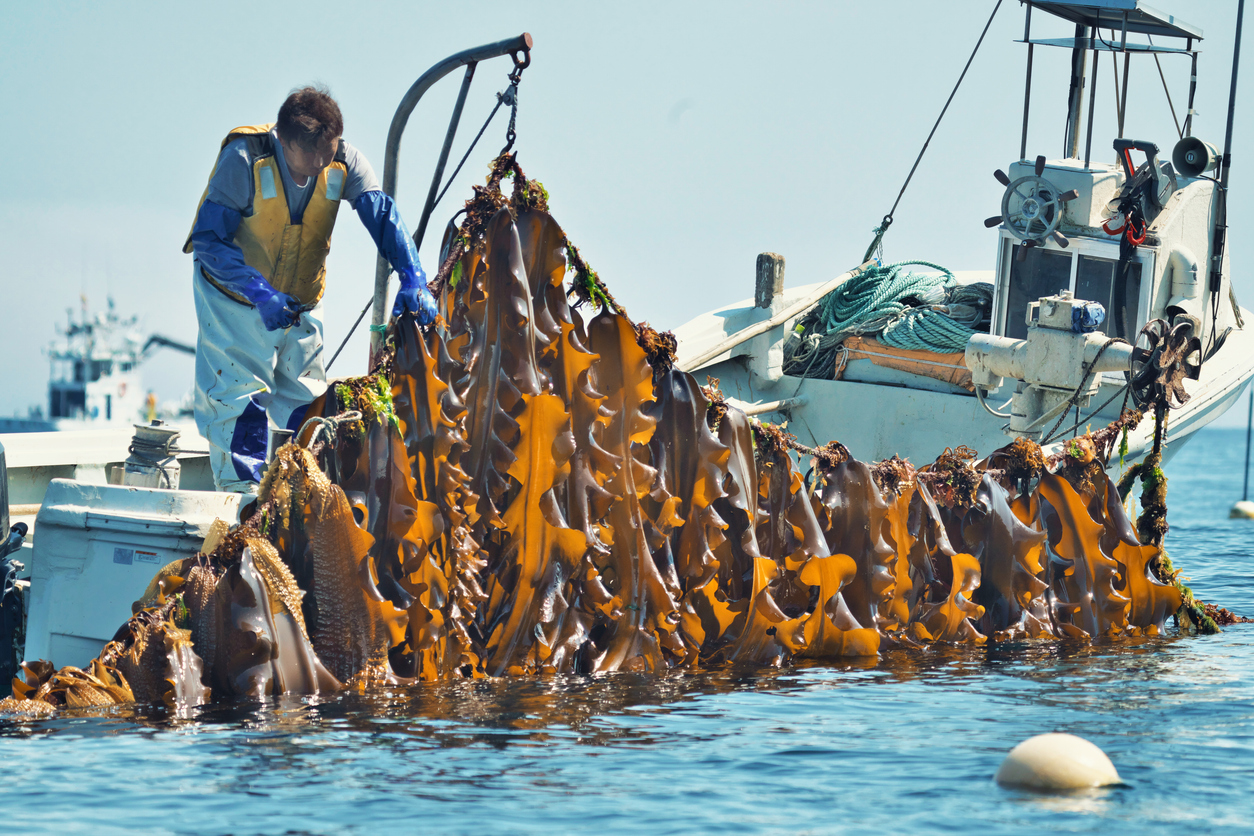
Source of Umami: Rich in glutamic acid, *kombu* creates a synergistic *umami* effect when paired with *katsuobushi* (dried bonito flakes). This combination forms *dashi*—the fundamental stock of Japanese cuisine—which defines the flavor profile of dishes like miso soup and *nimono* (simmered dishes).
Cultural Symbolism:Because its pronunciation resembles words for “path” and “celebration,” *kombu* symbolizes good fortune and longevity in traditional Japanese culture. It frequently appears in New Year’s cuisine (*osechi-ryori*), signifying smooth paths ahead and joyous well-being.
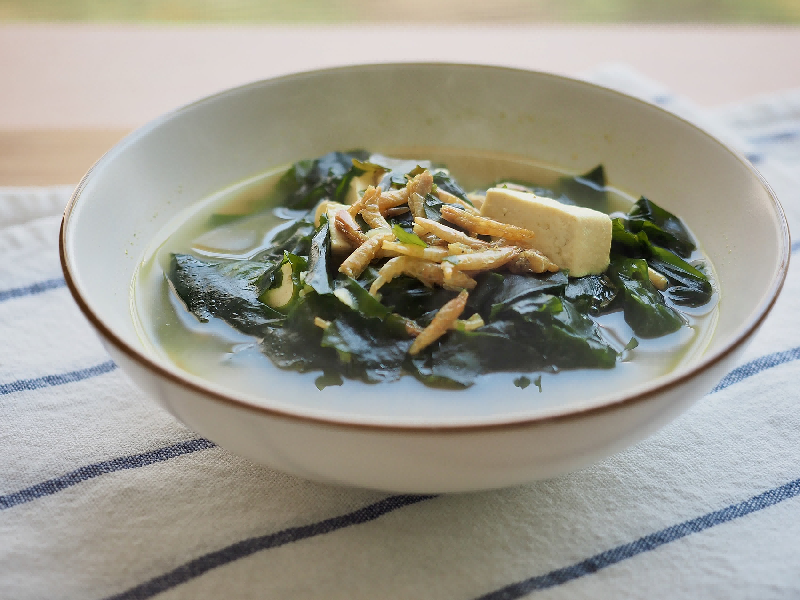
Ingredient Distinction:*Kombu* used in Japanese cuisine often originates from Hokkaido (e.g., *Ma-konbu* and *Rausu-konbu*); it is characterized by a thick, resilient texture and a pure *umami* flavor. It differs in variety and application from the common kelp found in China (which has thinner leaves and a softer, smoother texture), and professional Japanese kitchens rarely use them interchangeably.
Primary Uses
Preparing Stock (*Dashi*)
Ichiban Dashi (First Stock):*Kombu* is soaked in cold water and heated gently; the kelp is removed just before the water boils, followed by the addition of *katsuobushi*. This method extracts the clearest, most elegant *umami* flavor.
Niban Dashi (Second Stock): The kelp used for the first stock is simmered again with fresh water. This yields a more robust flavor and is commonly used for everyday soups or simmered dishes.
Tsukudani and Side Dishes
Kombu Tsukudani: Kelp is cut into strips or pieces and simmered slowly with soy sauce, sugar, and mirin until tender, sweet, and savory. It serves as a side dish for rice or a filling for rice balls (*onigiri*).
Rolls and Sushi:The natural adhesiveness of *kombu* is utilized to wrap fish (such as mackerel wrapped in kelp). The curing process allows the flavor to permeate the fish and alters its texture; this technique is commonly seen in *Edomae*-style sushi. . Direct use in dishes
· Oden and simmered dishes: Add kombu pieces directly to the simmering broth; this enhances the umami flavor and adds a unique texture, though the kombu itself is typically not eaten—only its flavor is utilized.
· Cold dressed dishes and salads: Use rehydrated tender kombu or *wakame* (seaweed) tossed with vinegar and sesame oil to highlight a refreshing taste.
Beijing Shipuller can provide good quality Kombu.
Contact
Beijing Shipuller Co., Ltd
Whats App: +86 13683692063
Web: https://www.yumartfood.com/
Post time: Jul-08-2026