Origin stage
The earliest form of sushi can be traced back to the Mekong River Basin in
Southeast Asia. The locals salted the fish and stored it under heavy weights to extend its shelf life. Initially, rice was not added. Later, this method was introduced to the coastal areas of China and gradually rice was added for fermentation, resulting in “jia” or “zhuoshan”, which is a food made by salting, fermenting rice and fish, used for preserving fish and having an acidic taste (recorded in ancient Chinese books such as “Er Ya” and “Shi Ying”). During the Spring and Autumn Period, the State of Yue (in present-day Zhejiang region) also had similar steamed rice sticks, which were part of the traditional cuisine of the ancient Yue people.
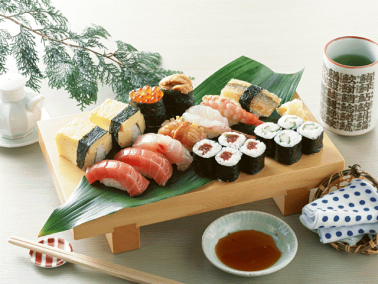
Sushi
Sushi has a long history in Japan, dating back to the end of the Yayoi period. Initially, it was a way to preserve fish: the fish was salted and pressed to ferment, resulting in an acidic taste, which was then eaten. This method was called “Narezushi” or fish rice sushi. There are records from the Heian period, and in the Nara period, people mixed rice with fish meat and salted it. The rice was mainly used as a fermentation medium, and when eaten, the rice was usually discarded, with only the fish meat being consumed. With the stability of society and the development of logistics in the Muromachi period, people sought a faster and fresher eating experience. The fermentation time was shortened, and vinegar was added to the rice to quickly acidify it, forming “Osushi”, which laid the foundation for modern raw sushi. In the Edo period (around 1680), the Kari sushi (box sushi) and the Edo-za sushi became popular in the Kansai region. The Gohan sushi (hand-held sushi) was invented by Katsushika and Ichiro in 1820 and became the representative form of modern sushi.
Modern Development of Sushi
Sushi has become a globally renowned delicacy. In Japan, it is both a daily dish and is used on special occasions. In recent years, there have been budget-friendly chain brands like “Sushi Ryō” in the Chinese market. In some places like Beijing, the number of reservations per day can reach several thousand tables, indicating the wide popularity of sushi in modern society. At the same time, the ingredients and flavors of sushi have also been constantly innovated, integrating different regional culinary cultures.
The production process of sushi
I. The essence of sushi: Rice and Vinegar
The essence of sushi lies in the rice. High-quality sushi rice is the key to making delicious sushi. Japanese short-grain rice, due to its strong stickiness and soft texture, has become the preferred choice for sushi rice. In addition, sushi Vinegar is an indispensable ingredient. Its balanced acid and sweet ratio gives it a refreshing taste. Therefore, sushi Vinegar can neutralize the greasiness of ingredients such as seaweed and raw fish, and it can also remove the fishy smell and enhance the flavor of the rice. Anyone who makes sushi knows that sushi Vinegar not only has the above advantages, but most importantly, it has the characteristic of not sticking to hands, which helps the rice maintain a loose state and makes the operation easier. At the same time, the reason why sushi can be eaten raw is mainly because sushi Vinegar can inhibit bacteria and preserve freshness. Therefore, the taste of the sushi and its freshness are closely related to the rice and sushi vinegar.
II. The Colors of Sushi: Fresh Ingredients and Decorations
Apart from the rice, various fresh seafood, vegetables, etc. are the sources of color for sushi. Raw fish slices such as tuna, salmon, eel, etc., are common ingredients in sushi. They not only have a delicious taste but also are rich in nutrients. At the same time, cucumber strips, avocados, carrot shreds, etc. not only add color to sushi but also bring a refreshing taste.
In addition, the seaweed powder as an embellishment not only enhances the appearance of sushi but also improves its flavor. The seaweed powder is made by grinding dried seaweed into fine powder. Sprinkled on the surface of sushi, it not only serves as an accent but also adds a touch of saltiness and fragrance.
III. Tools for Making Sushi: Professional Equipment and Household Appliances
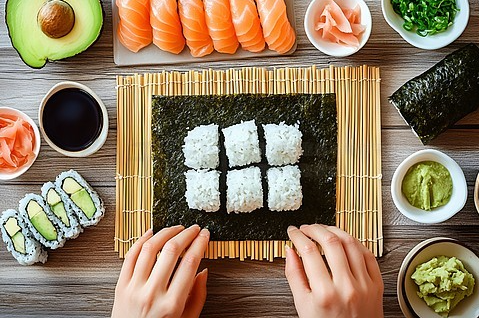
Making sushi requires certain skills and tools. For professionals, professional tools such as sushi mats, fish cutting knives, and sushi molds are indispensable. These tools can help chefs complete the sushi-making process quickly and accurately, ensuring that each piece of sushi achieves the best taste and appearance.
IV. Tips for Making Sushi: From Home to Commercial Use
Whether for home cooking or commercial kitchens, making sushi requires certain skills. First and foremost, mastering the cooking method and seasoning of the rice is fundamental. Rice that is too hard or too soft will affect the taste of the sushi. Secondly, when cutting the ingredients, try to maintain consistent sizes and thicknesses. This not only makes the sushi look more appealing but also makes it easier to eat.
Overall, the making of sushi is an art that combines both skill and attention to detail. Whether you are making it at home or in a professional kitchen, as long as you have the right ingredients and tools, you can create delicious sushi that satisfies your taste buds. I hope the above guide can help you find your own pleasure in the world of sushi!
Contact
Beijing Shipuller Co., Ltd
Whats App: +86 13683692063
Web: https://www.yumartfood.com/
Post time: Jun-26-2026