In Japanese cuisine, bamboo leaves hold a threefold significance—combining practical utility, aesthetic symbolism, and historical heritage—serving as both ancient vessels for preservation and central visual elements in modern plating.
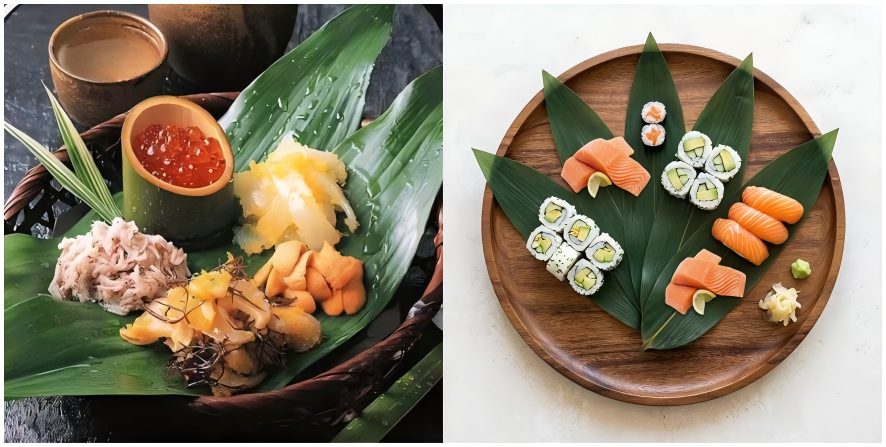
Cultural Significance
Historical Origins: *Sasa-zushi* (bamboo leaf sushi) is a precursor to modern *nigiri-zushi*; originally used for ritual offerings and portable meals for travelers, it evolved into a decorative convention. During the Edo period, the leaves even served as markers to distinguish the family crests of diners.
Symbol of Ritual and Atmosphere: From regional specialties (such as Ishikawa’s striped bamboo leaf sushi or Gifu’s *hoba-zushi*) to high-end *kaiseki* dining, bamboo leaves symbolize purity and harmony with nature, acting as the “unseen protagonist” of the cuisine’s aesthetic of restraint.
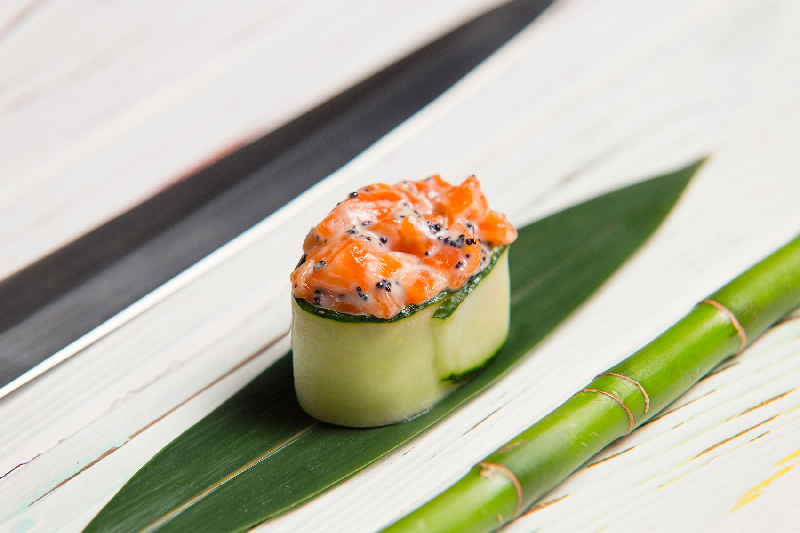
Core Functions
Physical Barrier and Preservation: Bamboo leaf fibers are fine and possess natural antibacterial properties (particularly in striped bamboo or *kumazasa*). They effectively separate ingredients from the serving surface, preventing moisture-induced spoilage. In traditional *oshi-zushi* (pressed sushi), wrapping and pressing the sushi in these leaves extends shelf life while imparting a subtle, fresh fragrance.
Visual Aesthetics: Acting as a vehicle for “negative space,” the verdant green leaves accentuate the vibrant colors of raw fish and draw the eye to the food itself. They evoke the atmosphere of the wild and the changing seasons, embodying the Japanese aesthetic of *mitate* (creative visual presentation).
Flavor Nuance: While they do not directly season the food, the leaves’ slight astringency and crisp, clean aroma help balance the acidity of vinegared rice or cut through richness, adding depth to the overall flavor profile without staining the food or overpowering its taste.
Beijing Shipuller can provide different styles for bamboo leaf
Contact
Beijing Shipuller Co., Ltd
Whats App: +86 13683692063
Web: https://www.yumartfood.com/
Post time: Jul-08-2026