The Japanese love noodles. There are countless specialty shops for ramen and soba in Japan, satisfying Japanese appetites day and night. Today, we will introduce another type of noodle beloved by the entire nation – udon.
Udon noodles (うどん or 饂飩) are thick noodles made from wheat flour, water, and salt. They are typically served in a soup made with dashi stock.
There are various theories about its origins, but it is generally agreed that udon was brought over from China. By the early Edo period (17th century), the modern form of udon had spread throughout Japan and was widely consumed. A few hundred years later, udon crossed the country’s borders and became familiar with non-Japanese in the west. However, are you pronouncing “Udon” correctly? No, not “YOU-DON.” Pronouncing it as “WU-DON” is closest to native Japanese pronunciation.
don dishes can be classified and named in various ways. There are classifications based on the noodles’ manufacturing method and physical state (dry, fresh, frozen, etc.). Today we will introduce Japan’s national dish, “udon,” based on its serving styles and toppings.
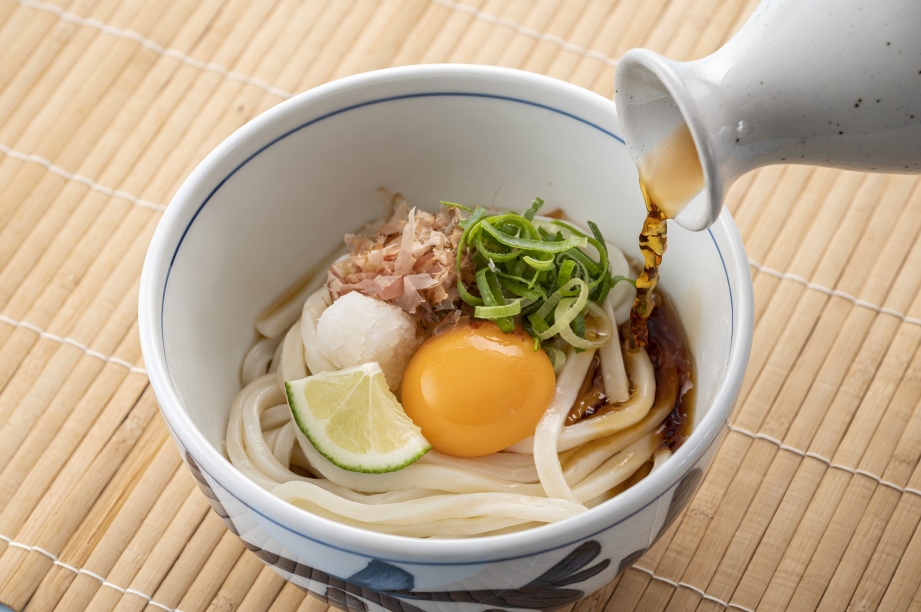
Udon can be enjoyed both hot and cold. The most basic style is “kake udon,” prepared by pouring a hot dashi stock over boiled noodles. In Western Japan, this simple udon dish is called “su udon,” meaning plain (su) noodles and dashi. This is a great way to enjoy the natural flavor of wheat noodles and dashi. Kake udon is a touchstone of the culinary skill of an udon restaurant.
An excellent option for hot summer is “zaru udon,” cold noodles rinsed in iced water. This refreshing udon dish on a bamboo strainer accompanies a dipping sauce with condiments such as scallions, sesame seeds, and wasabi.
Are you craving a warm, comforting dish to warm up in winter? Try “nikomi udon.” This hot-pot dish has noodles simmered in a flavorful broth with chicken, vegetables, and tofu. Udon noodles simmered in a small one-serving clay pot are called “nabe yaki udon.” The accumulated heat of the clay pot keeps the noodles warm for a long time.
A dish with stirred udon noodles is called “yaki udon,” containing various vegetables and meat and seasoned with soy sauce with a dashi as extra favoring or a savory sauce used in yaki soba. Kids’ go-to variation is ketchup-flavored yaki udon.
Tsukimi udon: Udon topped with a raw egg to resemble a full moon.
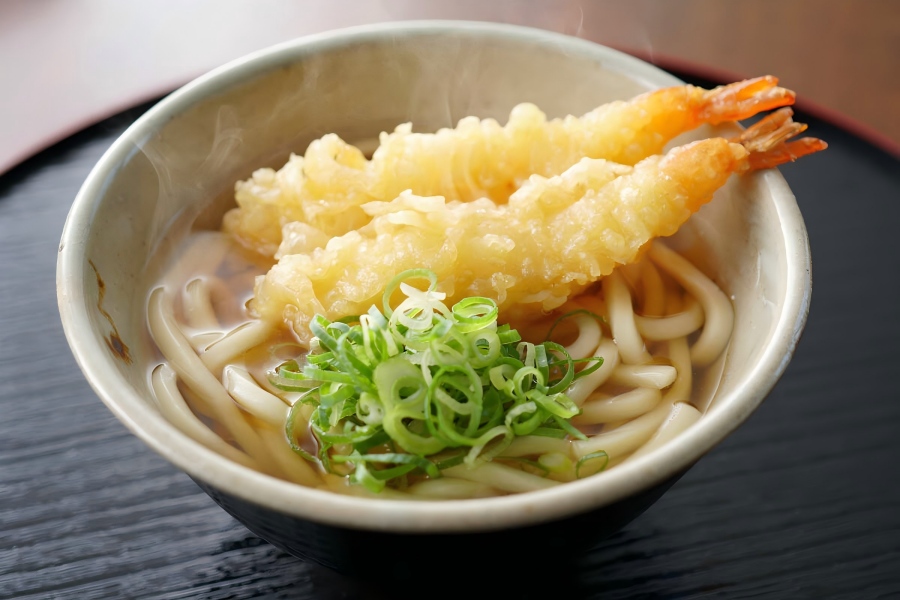
Tempura udon: This dish caused heated debates over the eating order tempura first or noodle first.
Niku udon (肉うどん): The bowl is topped with beef or pork slices cooked in a sweet and savory soy sauce.
Chikara udon (力うどん): A grilled or toasted mochi (rice cake) is used as a topping. This dish is typically called “chikara udon” instead of “mochi udon” because of the typical Japanese wordplay by pronunciation. Mochi can be translated as ”a person with an ownership of something or having ownership of something.” For example, chikara mochi means strong person in Japanese, which partially rhymes with another meaning, rice cake, a sacred food to make you strong based on Japanese food culture.
Contact
Beijing Shipuller Co., Ltd
Whats App: +86 13683692063
Web: https://www.yumartfood.com/
Post time: Dec-03-2025