We enjoy various types of mochi rice cakes in Japan, especially for Japanese New Year. In this recipe, you’ll learn how to prepare at home the three most popular flavors of mochi—kinako (roasted soybean flour), isobeyaki (soy sauce with nori), and anko (sweet red bean paste).
In this post, I’ll explain the difference between sweet mochi and plain mochi. I’ll also introduce you to three delicious and easy ways to enjoy plain mochi at home. These are the classic ways that Japanese households prepare this traditional food that highlight mochi’s best qualities. I hope you enjoy trying them all!
What is Mochi?
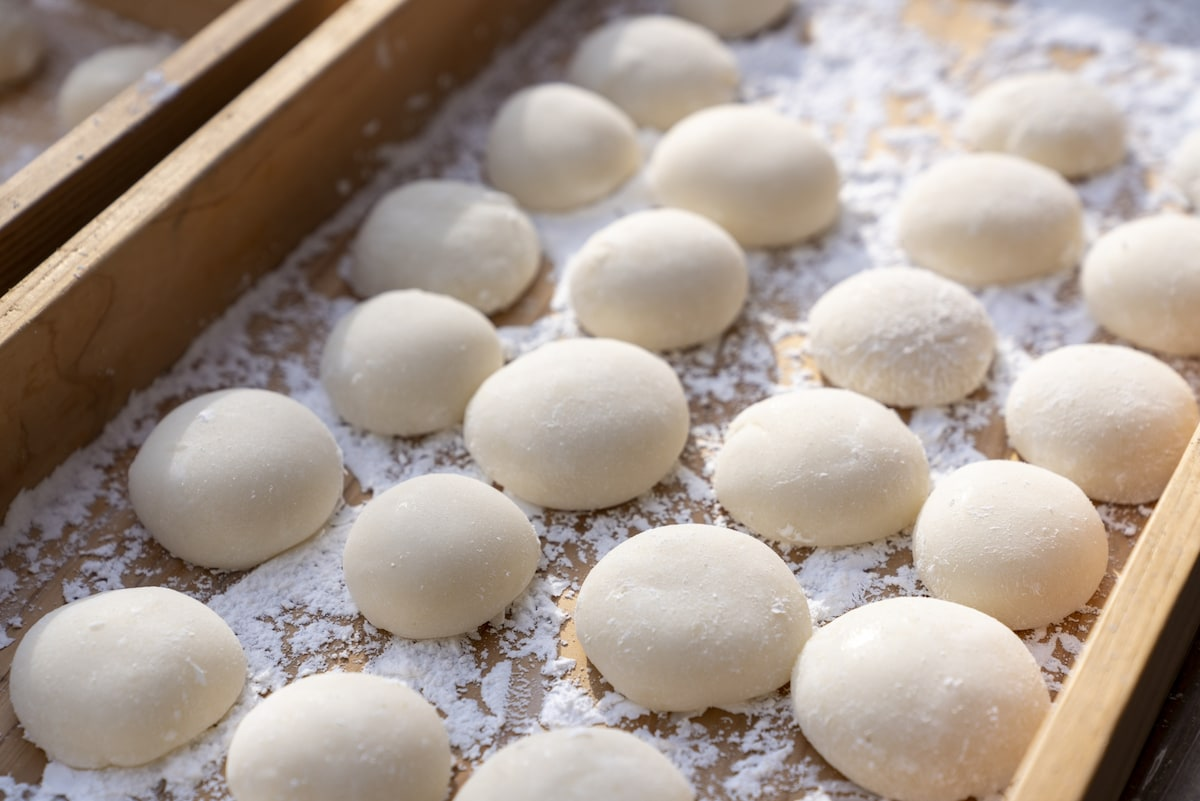
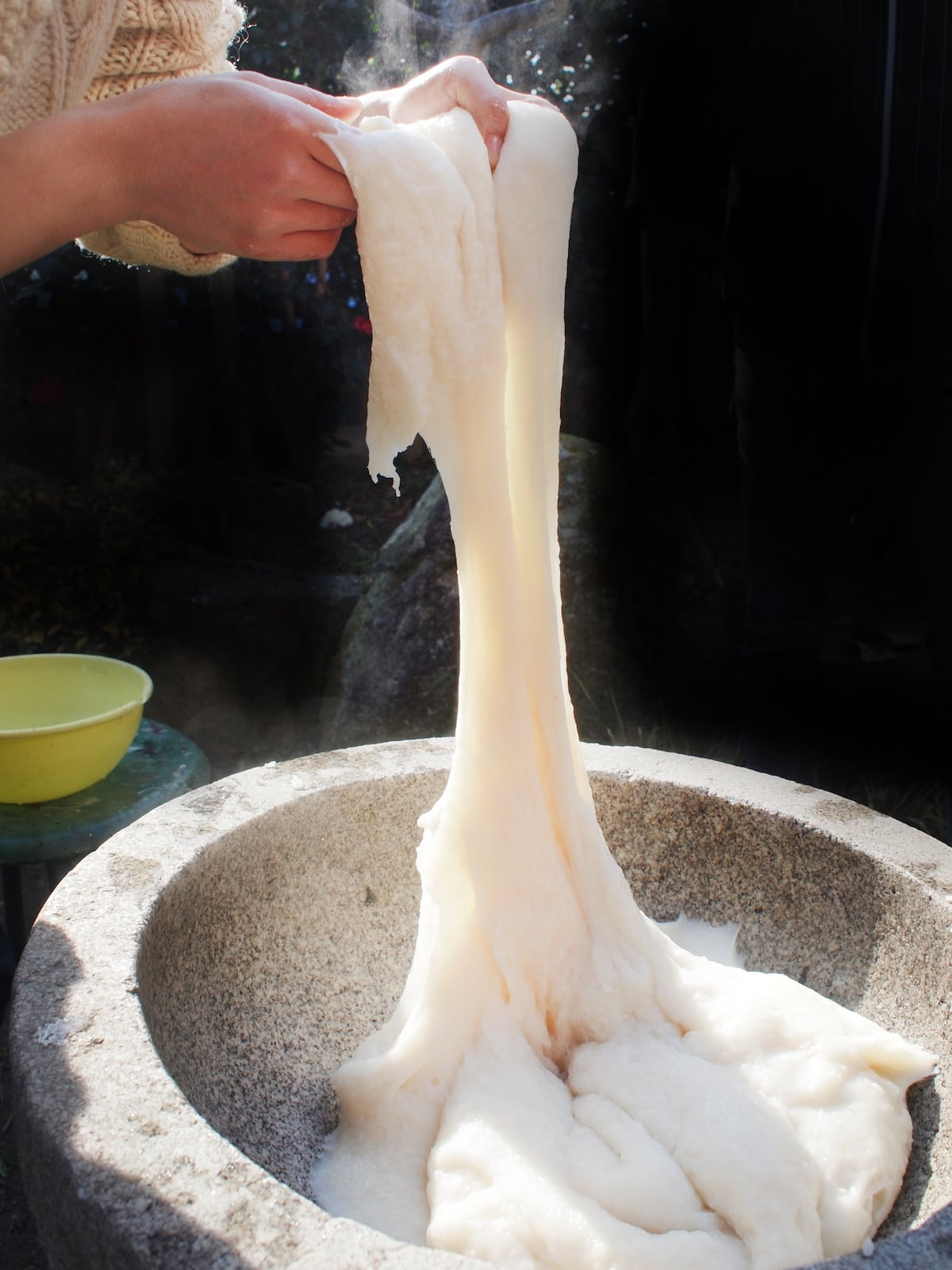
Mochi is a Japanese rice cake made of mochigome (糯米), a short-grain japonica glutinous rice. The cooked rice is pounded into a paste. Then, the hot paste is molded into desired shapes such as round-shaped cakes called maru mochi. It has a sticky, chewy texture and hardens as it cools.
In Japanese cooking, we use freshly made mochi for either a savory dish or sweet treat. For savory dishes, we add plain mochi to a soup like Ozoni, hot udon noodle soup such as Chikara Udon, and Okonomiyaki. For sweet snacks and desserts, make it into Mochi Ice Cream, Zenzai (Sweet Red Bean Soup), Strawberry Daifuku, and more.
Making fresh mochi from glutinous rice takes a lot of time and effort, so most families don’t make it from scratch anymore. If we want to enjoy freshly pounded mochi, we usually attend a mochi pounding event. To make it fresh at home, some folks buy a Japanese mochi pounding machine for this task; some Japanese bread makers have a mochi-pounding option, too. We can also make mochi with a stand mixer.
Plain Mochi vs. Daifuku
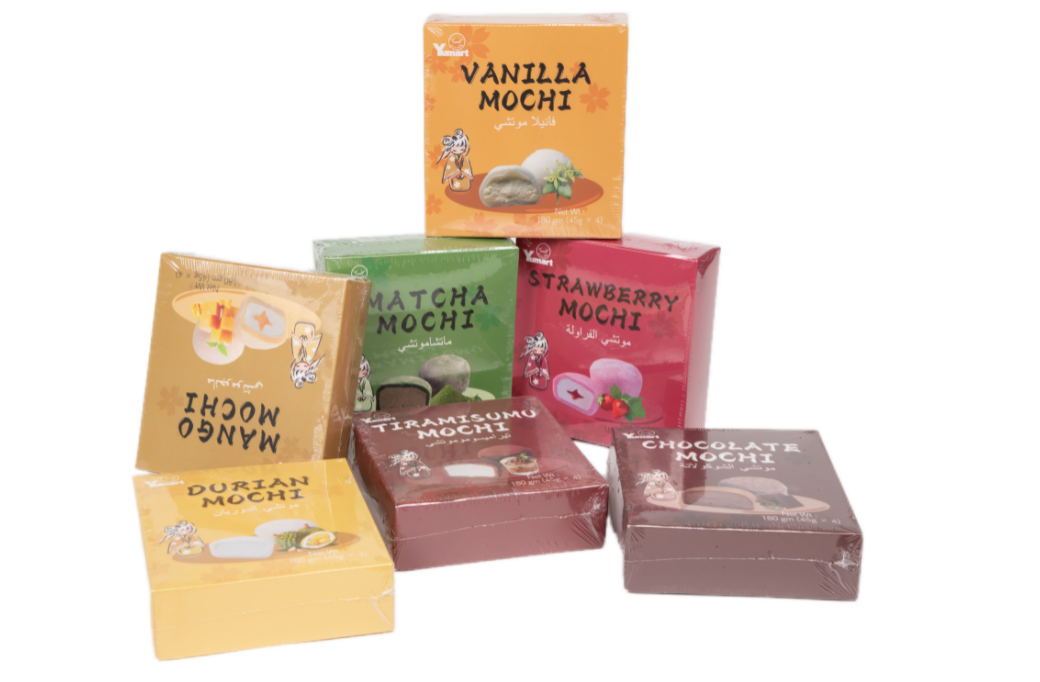
When you hear the word “mochi,” you might think of the round confectionery that’s stuffed with a sweet filling. It could be a traditional red bean paste or white bean paste with or without green tea flavor, or a filling with modern flavors like chocolate, strawberry, and mango. In Japan, we usually call that type of sweet mochi daifuku.
When we say “mochi” in Japan, it usually implies plain mochi that’s either freshly made or packaged and purchased at supermarkets.
Convenient Kiri Mochi for Home Use
When we eat mochi at home, we buy kiri mochi (切り餅, sometimes kirimochi) from the grocery store. This plain mochi is dried, cut into blocks, and individually packaged in plastic bags. It’s a shelf-stable product that you can keep in the pantry for a convenient mochi snack anytime of year as well as during the Japanese New Year.
Each family cooks the mochi differently. Today, I’ll show you the 3 most popular recipes to enjoy mochi using kirimochi:
*Anko mochi (餡子餅) – sweet red bean paste stuffed inside the mochi.
*Kinako mochi (きな粉餅) – mochi coated with a roasted soybean flour (kinako) and sugar mixture.
*Isobeyaki (磯辺焼き) – mochi coated in a soy sauce and sugar mixture and wrapped with nori seaweed. Most people prefer it without sugar, but my family always adds it. I assume this is based on a family’s preference and not on regional differences.
How To Make Three Flavors of Mochi at Home
Toast the mochi in a toaster oven until puffed up and slightly golden brown, about 10 minutes. You can also pan-fry, boil it in the water, or microwave.
1.Gently smash the puffed mochi with your hand. Next, dress your mochi with roasted soybean flour, soy sauce, and sweet red bean paste.
2.For kinako mochi, mix the kinako and sugar. Dip the mochi in hot water and dredge in the kinako mixture.
3.For isobeyaki, mix the soy sauce and sugar and quickly soak the mochi, then wrap with nori.
4.For anko mochi, stuff the smashed mochi with a scoop of anko.
Contact
Beijing Shipuller Co., Ltd
Whats App: +86 13683692063
Web: https://www.yumartfood.com/
Post time: Jan-20-2026