Seaweed has long transcended its traditional supporting role in Japanese cuisine. With its unique marine flavor, rich nutritional components, and highly adaptable processing characteristics, it has opened up diverse application scenarios in the food industry. Upgrades in industrial processing technology have further propelled it from a side dish to a leading industry player. The following details four of the most representative industrial applications of seaweed.
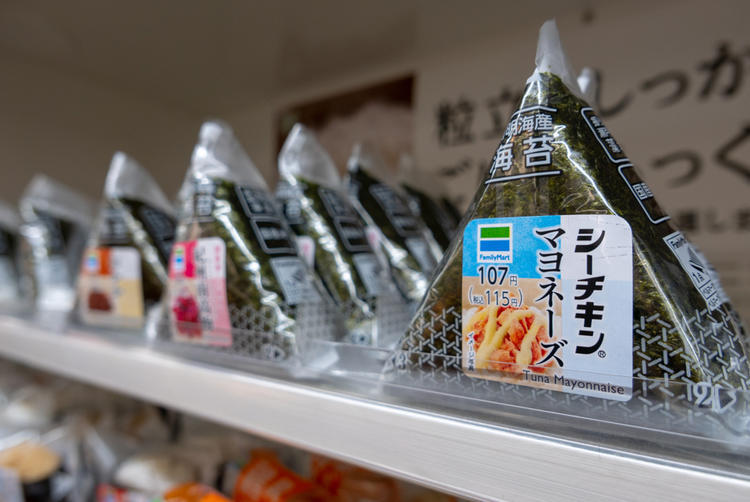
Standardized Rice Ball Production: The Core Carrier for Fast Food and Ready-to-Eat Foods
Rice balls are one of the most mature industrial applications of seaweed. Their core advantage lies in achieving consistent flavor and efficient mass production through standardized processes. In South Korean kimbap factories, automated production lines handle the entire process from rice spreading and filling to rolling and cutting: vacuum-cooled cooked rice is evenly spread on standard sheets of seaweed, combined with pre-treated fillings such as burdock and salmon, shaped by a kneading machine, and finally frozen and individually packaged before leaving the factory. Depending on the consumption scenario, industrialized rice balls have clear product tiers: the mid-to-high-end market uses organic seaweed and rice, featuring premium varieties such as truffle and pork floss, and Japanese salmon; the fast-food channel uses pre-cooked rice and regular seaweed, with a lightweight 120g serving design suitable for takeout needs; and unsalted seaweed rice balls for infant formula strictly adhere to national standards, ensuring low sodium and high fiber properties.
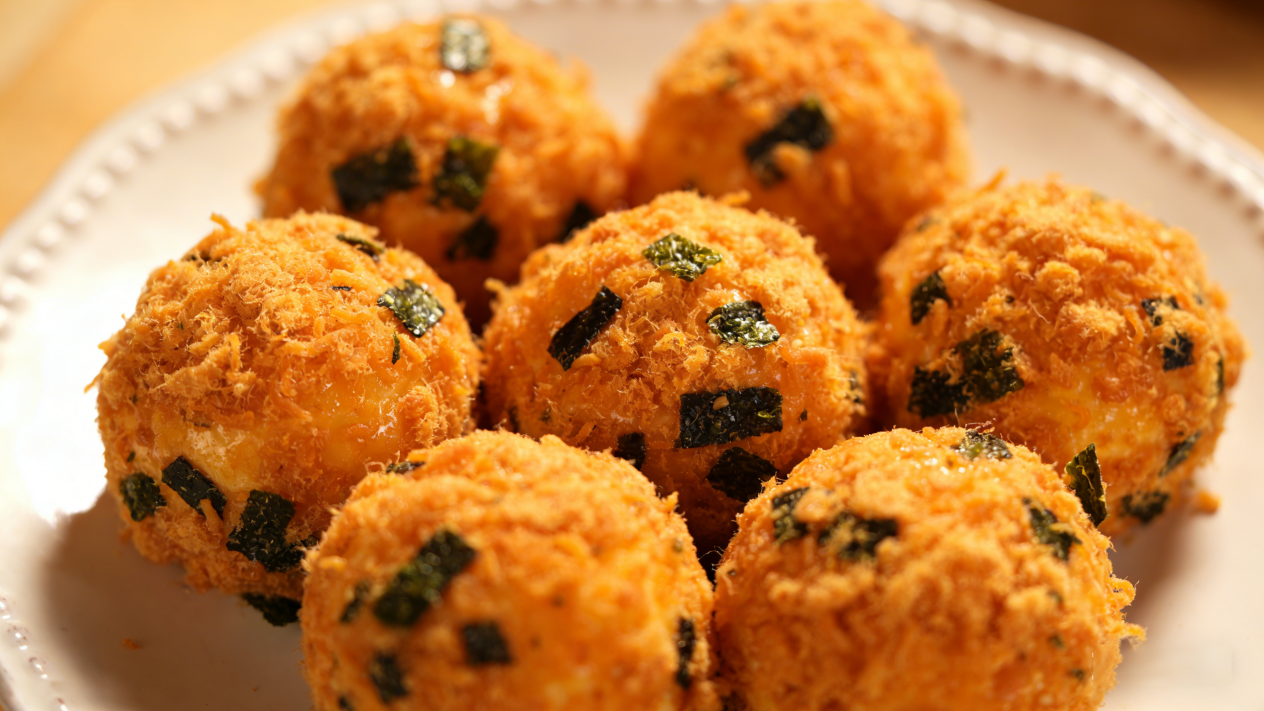
Nori Flakes/Powder: “Flavor Enhancers” in the Food Industry
Nori flakes and powder, as core derivatives of industrial processing, are widely used in catering, snacks, and pre-prepared dishes due to their convenience and adaptability. In industrial production, high-quality nori is roasted at low temperatures and then pulverized to produce seaweed flakes of 1-5 mm or ultrafine seaweed powder of 100 mesh or finer, depending on the requirements. The former retains its crisp texture, while the latter facilitates even mixing. In applications, seaweed flakes are a classic ingredient for rice dishes, soups, and fried eggs: imported Japanese seaweed flakes, thanks to their additive-free process, are a key ingredient in enhancing the flavor of miso soup, quickly releasing a fresh ocean taste when sprinkled into hot broth. In ready-to-eat meal production, seaweed flakes are mixed into the fillings of self-heating rice and frozen dumplings to enhance flavor. Seaweed powder is used as a food additive in potato chips and biscuits, giving the products a unique seaweed flavor. In sauce production, an addition of 2%-10% can create seaweed-flavored salad dressings and rice toppings, suitable for industrial mass production needs.
Seaweed Crisps: A “Healthy New Choice” in Snack Foods
Seaweed crisps are a blockbuster category in the industrial application of seaweed, accounting for 68.4% of the ready-to-eat seaweed market. Their success stems from the precise control of texture and flavor achieved through processing technology. Industrial production utilizes vacuum freeze-drying or low-temperature baking processes to maximize the preservation of the seaweed’s natural nutrients and crispy texture, avoiding flavor loss caused by high temperatures. In terms of product innovation, flavor diversification has become a core trend: in addition to basic soy sauce and sesame flavors, there are also filled seaweed crisps, made by coating two sheets of seaweed with maltose, sesame seeds, and chopped nuts, and then baking at a low temperature, offering both sweetness and crispiness. The high-end product line uses a combination of Vietnamese spring roll wrappers and seaweed, deep-frying at 70% heat until puffed up, then sprinkling with seasoning powder before leaving the factory, suitable for large-scale mass production.
Ingredients for Pre-made Dishes and Convenience Foods: Key Elements of Industrialized Seasoning
The application of seaweed in pre-made dishes and convenience foods hinges on satisfying both “flavor standardization” and “ease of consumption.” In Japanese ramen seasoning packets, dehydrated seaweed sheets are vacuum-packed, allowing for rapid rehydration upon contact with hot water while retaining their chewy texture. In self-heating hot pot vegetable packets, seaweed flakes are combined with wakame and kelp, enriching the variety of ingredients and enhancing umami. In frozen foods such as dumpling and bun fillings, seaweed powder is mixed with meat to prevent flavor loss during freezing.
From traditional condiments to functional foods, the industrial applications of seaweed continue to expand. In terms of processing technology, low-temperature vacuum baking and ultra-fine grinding processes will become more widespread, balancing flavor and nutrient retention. In terms of product innovation, the combination of seaweed with other ingredients and the precise addition of functional components will become core directions. On the market side, the standardization needs of B-end catering channels and the health demands of C-end consumers will jointly drive the seaweed industry towards deep processing and branding. In the future, seaweed may shed its “niche ingredient” label and become an indispensable core ingredient in the food industry.
Contact:
Beijing Shipuller Co., Ltd.
WhatsApp: +86 136 8369 2063
Web: https://www.yumartfood.com/
Post time: Apr-08-2026